
The BBC recently reported on the Supreme Court’s decision to affirm the public’s right to wild camp in designated areas of Dartmoor National Park, following a legal challenge by landowners Alexander and Diana Darwall. The court’s unanimous decision reinforces the tradition of backpack camping on the moor, provided campers adhere to the established camping code, and ensure they are within a backpack camping area.
Dr. Kevin Bishop, Chief Executive of the Dartmoor National Park Authority, emphasized that wild camping is intended for small-scale, low-impact experiences—not “large tents adorned with fairy lights”. He urged prospective campers to consult the park’s website to understand permitted areas and conduct expectations.
The park’s code of conduct stipulates that camping equipment must be portable, groups should not exceed six people, and campers must stay out of sight from roads and buildings. Stays are limited to two nights, and campers are required to leave no trace, including refraining from lighting fires and ensuring all rubbish is taken away.
Some welcomed the ruling as a chance to reconnect with nature responsibly, highlighting the importance of leaving no trace to protect Dartmoor’s ecosystems.
Some landowners have expressed concerns about potential increases in irresponsible camping activity, and highlighted the need for more resources to protect Dartmoor from some destructive behaviour.
The Dartmoor Society encourages all visitors to embrace this opportunity with respect and care, ensuring that the natural beauty and ecological integrity of the moor are preserved for future generations.
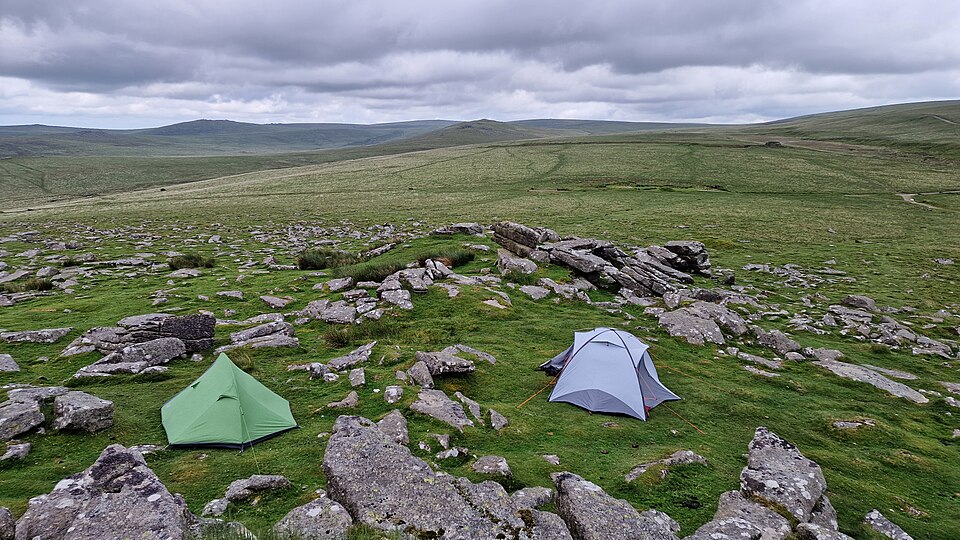
https://commons.wikimedia.org/wiki/File:Wild_camping_on_Dartmoor.jpg