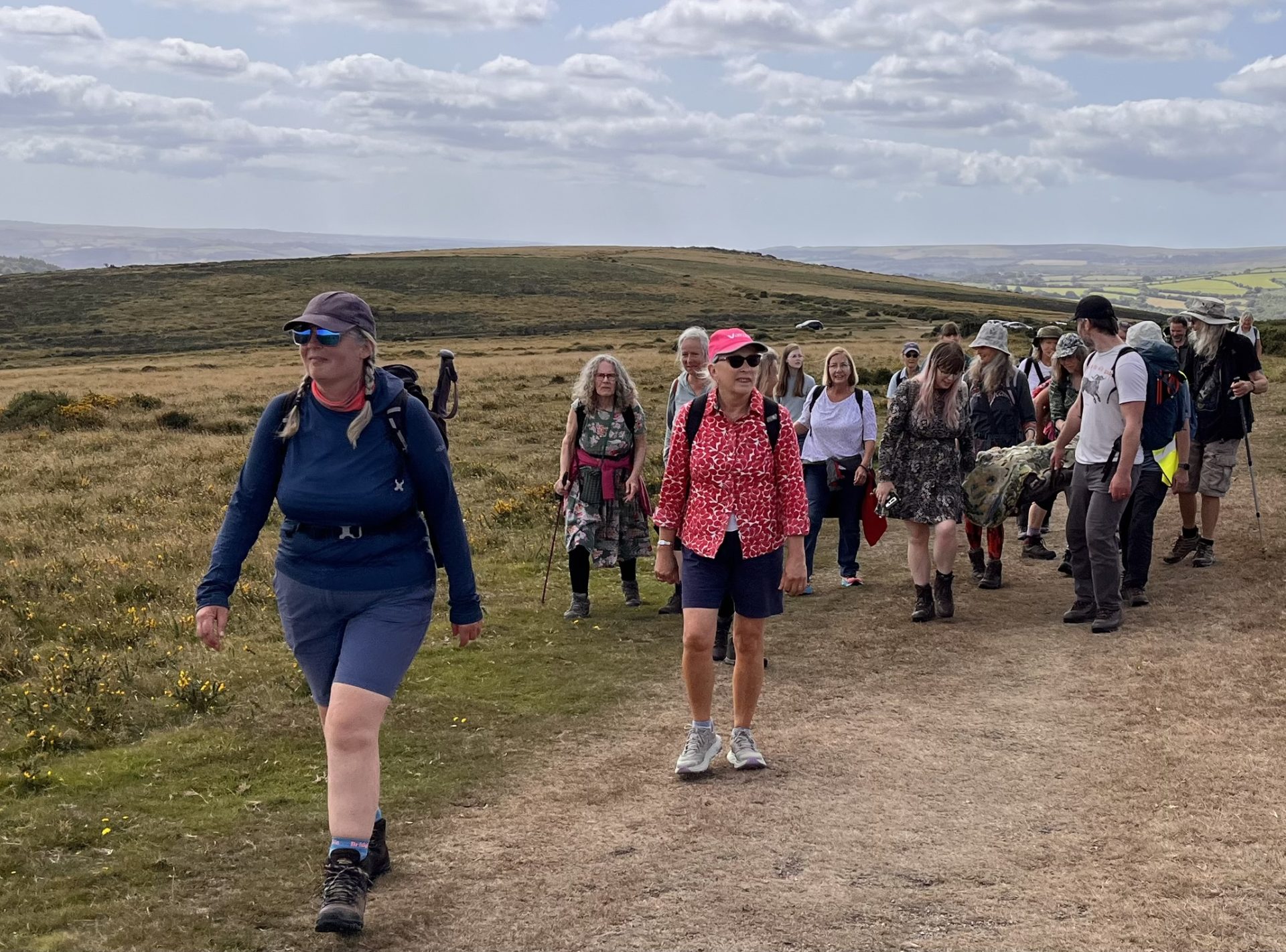
On Wednesday 6th August, thirty-five people gathered on the village green at Widecombe-in-the-Moor to take part in a deeply reflective event, the Dartmoor Shroud Pilgrimage, a 4.5-mile walk across moorland that asked not only a provocative question, but encouraged personal connection with the landscape itself.
The pilgrimage was inspired by the 2025 Exhibition at the Museum of Dartmoor Life, which poses the challenging question: “Is Dartmoor dying?” Responses from a diverse range of organisations, including the Dartmoor Society, Dartmoor National Park Authority (DNPA), the South West Peatland Partnership, and the Dartmoor Preservation Association (DPA), are currently on display in the museum.
The event was jointly organised by the Museum of Dartmoor Life and the DPA, and was led by museum curator Kristy Turner, who welcomed the pilgrims and set the tone for a day of reflection, connection, and open dialogue. Among those walking were John Howell and Helen Bruce from the DPA, representatives from the South West Peatland Partnership, The Dartmoor Society, textile artist Yuli Somme, and herbalist Jenny Carden.
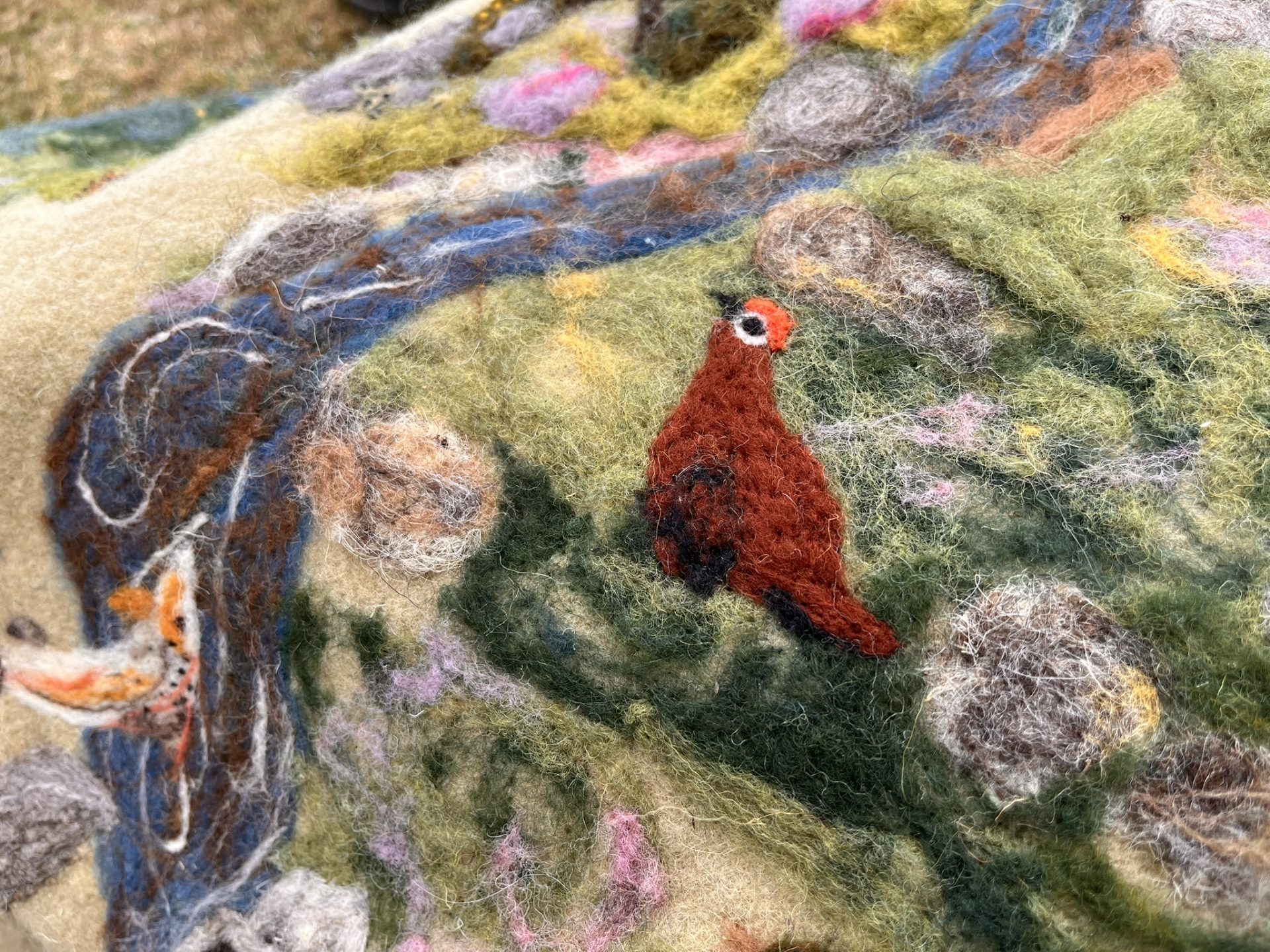
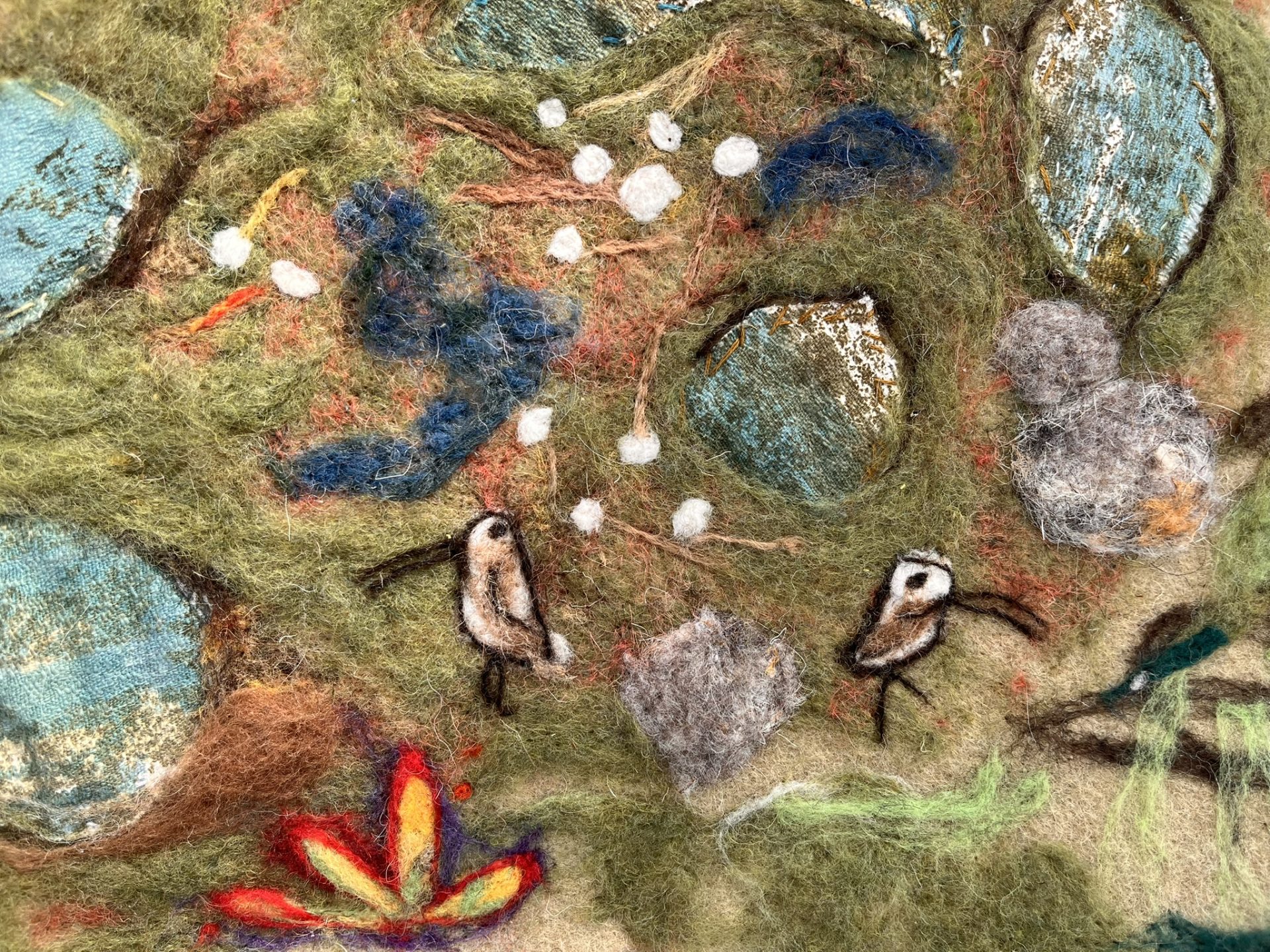
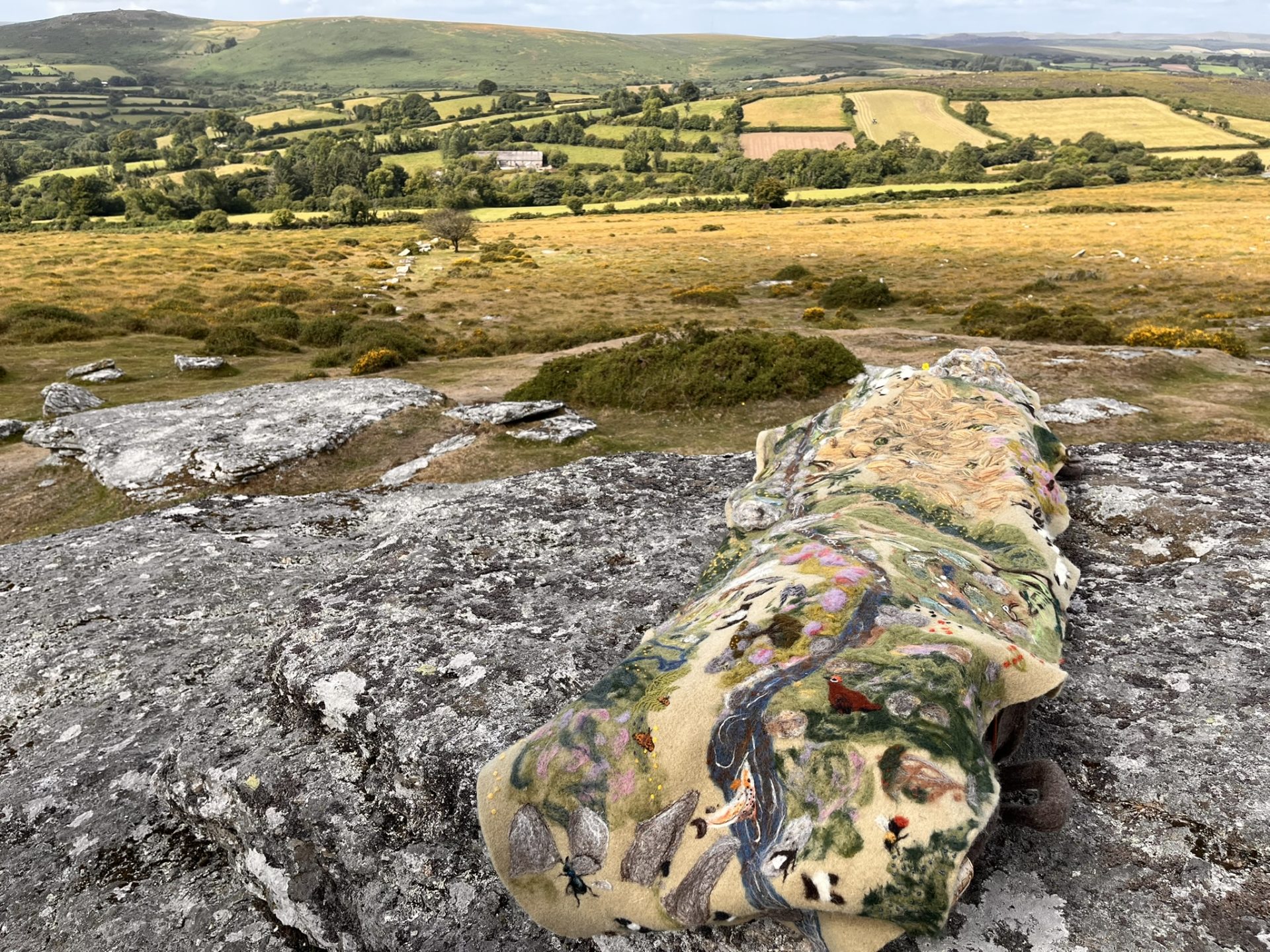
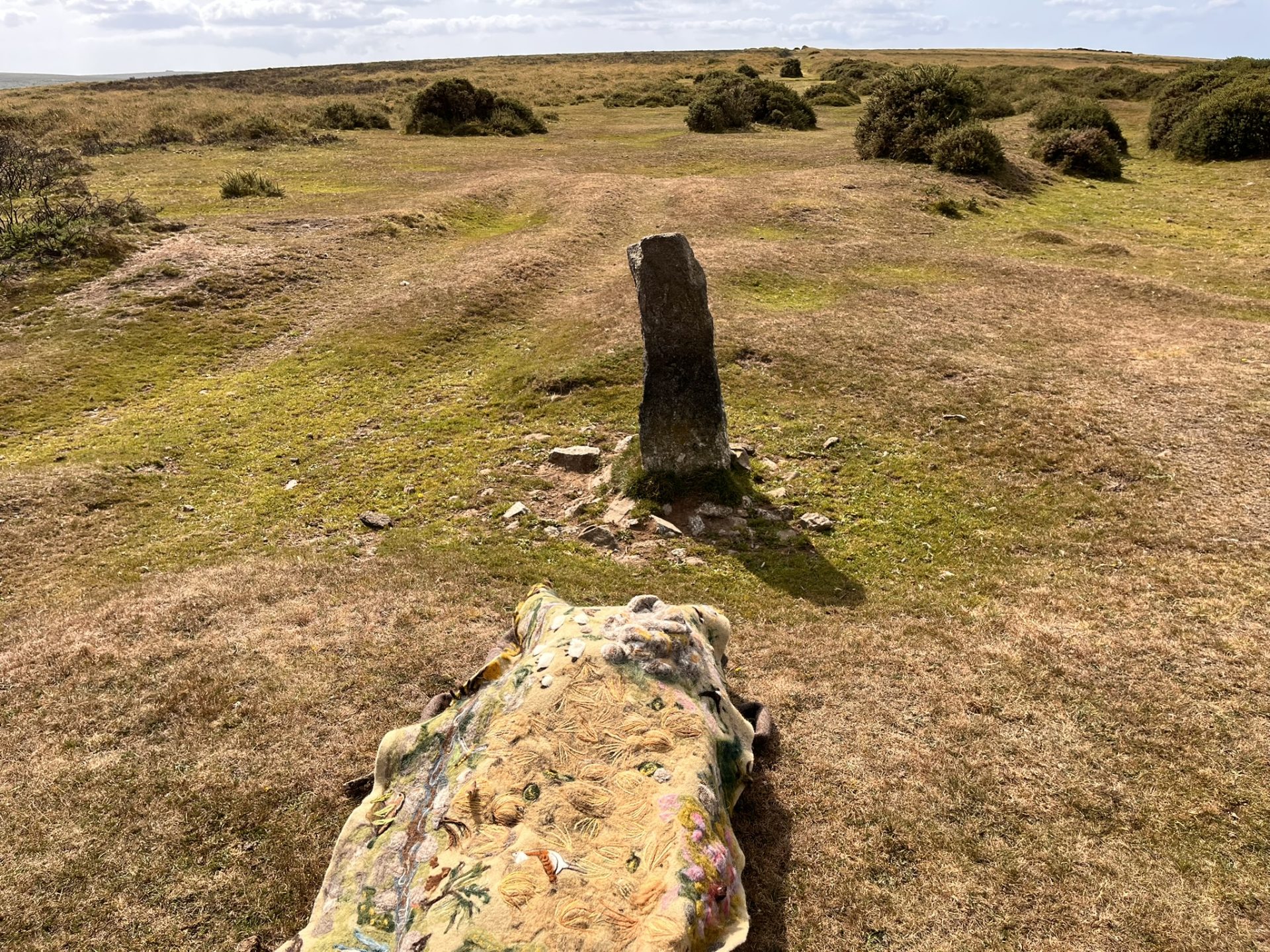
At the heart of the pilgrimage was the ‘Shroud for Mother Nature’, a stunning, hand-felted textile created by the local community under the guidance of Yuli Somme. Originally the centrepiece of the museum’s 2025 exhibition, the shroud had been carried out onto the moor for this special occasion. Its surface is covered in intricate, needle-felted imagery of Dartmoor’s habitats, its endangered and lost species. The colours of the shroud beautifully reflect the colours of the moor.
The route began with a steep climb up the road out of Widecombe, rewarded with panoramic views from Two Crosses, before the group made its way to Wind Tor. At the top, Jane Elliott, Chair of the Dartmoor Society, led some simple group singing, adding a gentle and grounding moment of shared voice and presence to the experience.
Throughout the walk, participants took time to stop, talk, listen, and be still. For many, the physical act of walking the moor alongside the shroud and others who care deeply about Dartmoor offered a new kind of engagement with the question at the heart of the exhibition.